


THE JESUS JOURNEY

LOCATION:
Jordan Valley
2
Day 2 of 180
"Jesus walks the, undocumented miles between Nazareth and the Jordan, descending from the hills of Galilee toward the deep Jordan Rift Valley. Step by step, He approaches the water’s edge where His hidden life will soon be publicly revealed."
From Nazareth to the Waters of Baptism
Into The Jordan Valley
YOUR PROGRESS
DAYS COMPLETED
1% of the Journey
2 / 180
JOURNEY AUDIO
Hear today's setting

Add paragraph
DAY
1

Add paragraph
DAY
1
Add paragraph
DAY
1
Add paragraph
DAY
1
Add paragraph
DAY
1
Add paragraph
DAY
DAY
Add paragraph
DAY
DAY
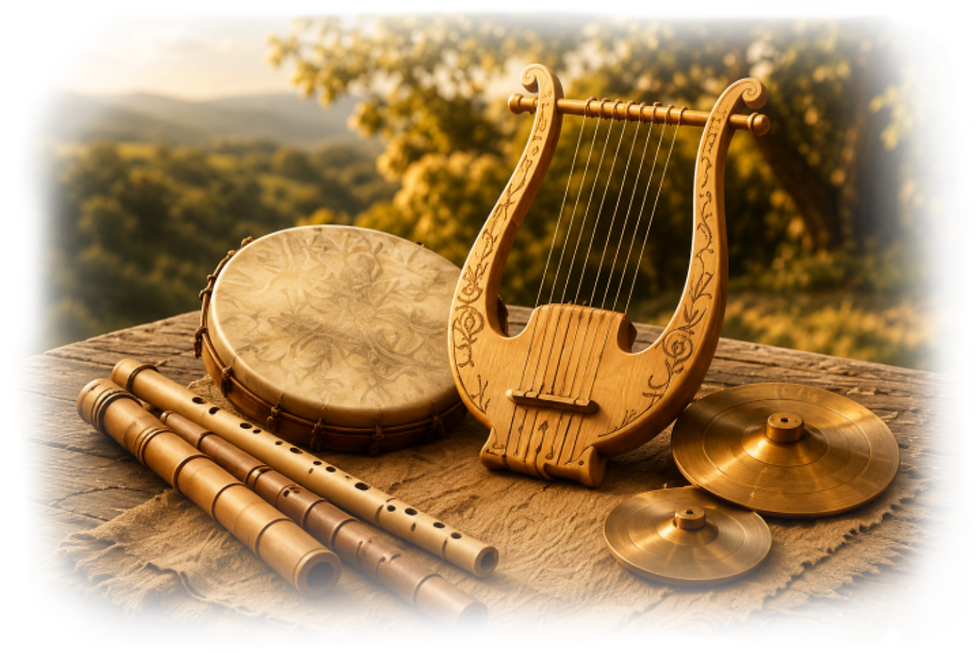
SOUNDS OF FIRST CENTURY ISRAEL
The Limestone Path

X Close
DAY 2: INTO THE JORDAN VALLEY
יום תניינא
(DAY 2)



DID YOU KNOW?
Collapsible text is perfect for longer content like paragraphs and descriptions. It's a great way to give people more information while keeping your layout clean. Link your text to anything, including an external website or a different page. You can set your text box to expand and collapse when people click, so they can read more or less info.
JOURNEY VIDEO
Experience the story of day
2
TODAY'S LOCATION
Explore the history

Mark 1:9- At that time Jesus came from Nazareth in Galilee
and was baptized by John in the Jordan."
Matthew 3:13- Then cometh Jesus from Galilee to Jordan unto John, to be baptized of Him.
JOURNEY VIDEO
TODAY'S SCRIPTURE REFERENCES
Read the truth found in today's journey
DAILY INSIGHTS

Click Todays Location
For Interesting
Facts

The Limestone Path

SOUNDS OF FIRST CENTURY ISRAEL
X Close
DAY 2: INTO THE JORDAN VALLEY
(DAY 2)
יום תניינא

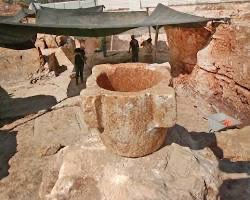


By the second day of the journey, Jesus would likely have moved beyond the hills around Nazareth and across the eastern Jezreel Valley toward the region of Beth Shean, known in the Roman world as Scythopolis. This area stood at one of the most important crossroads in the land. Roads from Galilee, the Jezreel Valley, the Jordan Valley, and the eastern route through Perea all converged here. What looked like an ordinary travel corridor was actually one of the great passageways of ancient Israel. The landscape itself was changing dramatically. The green ridges and fertile fields of Galilee were beginning to give way to the hotter, lower, and more rugged terrain of the Jordan Rift Valley. With every mile, the air grew warmer and drier. The descent toward the Jordan Valley brought travelers into one of the lowest regions on earth. This was not simply a spiritual journey — it was a real and demanding road through changing geography, long known by merchants, shepherds, pilgrims, and caravans. Beth Shean also reveals how varied Jesus’ world truly was. Archaeologists have uncovered a remarkable ancient city there, including colonnaded streets, bathhouses, temples, a large theater, mosaics, and public buildings. These remains show that Jesus’ journey passed not only through quiet villages and wilderness roads, but near powerful cities shaped by Greek and Roman culture. Yet many Jewish pilgrims from Galilee likely continued south by crossing near this region and traveling through Perea, choosing that route to avoid passing directly through Samaria. Day 2 helps us picture Jesus moving out of the familiar world of His childhood and into the broader world of roads, travelers, cities, and wilderness. The Jordan Valley was more than a destination — it was a threshold. Every step south carried Him closer to the waters of the Jordan, and closer to the moment when His public ministry would begin.
DID YOU KNOW?
X Close
DAY 2: INTO THE JORDAN VALLEY
יום תניינא
(DAY 2)
DID YOU KNOW?
By the second day of the journey, Jesus would likely have moved beyond the hills around Nazareth and across the eastern Jezreel Valley toward the region of Beth Shean, known in the Roman world as Scythopolis. This area stood at one of the most important crossroads in the land. Roads from Galilee, the Jezreel Valley, the Jordan Valley, and the eastern route through Perea all converged here. What looked like an ordinary travel corridor was actually one of the great passageways of ancient Israel. The landscape itself was changing dramatically. The green ridges and fertile fields of Galilee were beginning to give way to the hotter, lower, and more rugged terrain of the Jordan Rift Valley. With every mile, the air grew warmer and drier. The descent toward the Jordan Valley brought travelers into one of the lowest regions on earth. This was not simply a spiritual journey — it was a real and demanding road through changing geography, long known by merchants, shepherds, pilgrims, and caravans. Beth Shean also reveals how varied Jesus’ world truly was. Archaeologists have uncovered a remarkable ancient city there, including colonnaded streets, bathhouses, temples, a large theater, mosaics, and public buildings. These remains show that Jesus’ journey passed not only through quiet villages and wilderness roads, but near powerful cities shaped by Greek and Roman culture. Yet many Jewish pilgrims from Galilee likely continued south by crossing near this region and traveling through Perea, choosing that route to avoid passing directly through Samaria. Day 2 helps us picture Jesus moving out of the familiar world of His childhood and into the broader world of roads, travelers, cities, and wilderness. The Jordan Valley was more than a destination — it was a threshold. Every step south carried Him closer to the waters of the Jordan, and closer to the moment when His public ministry would begin.
SOUNDS OF FIRST CENTURY ISRAEL
The Limestone Path
TODAY'S
D E V O T I O N A L


Solace At the Gate
The Way Down
There is a powerful truth written into the geography of Jesus’ journey today. The King of Heaven did not begin His public ministry in the high places of the world. He began by walking downward—into the Jordan Valley, one of the lowest places on earth.
Our natural desire is often to climb. We seek greater influence, a title, recognition, and visibility. We may even believe that doing something great for God requires a larger platform.
But Jesus shows us another way.
The path to spiritual authority begins not with self-promotion, but with humility. It begins with a willingness to descend—to serve quietly, to stand beside the broken, and to enter places others would rather avoid.
Before Jesus was lifted up in resurrection, He first walked down into the valley. Before He wore a crown, He chose the waters of surrender.
Perhaps God is not calling you higher today. Perhaps He is calling you lower—to a place of humility, obedience, service, or compassion. The valley may feel like a step backward, but in the kingdom of God, the way down is often the beginning of being raised up.