


THE JESUS JOURNEY

LOCATION:
Judean Desert
4
Day 4 of 180
"After His baptism in the Jordan, Jesus is led by the Spirit into the wilderness. Leaving the crowds and the river behind, He enters the rugged desert alone, beginning forty days of fasting, silence, and testing before His public ministry moves forward."
Jesus Is Led By The Spirit Into The Wilderness
Into The Wilderness
YOUR PROGRESS
DAYS COMPLETED
2% of the Journey
4 / 180
JOURNEY AUDIO
Hear today's setting

Add paragraph
DAY
1

Add paragraph
DAY
1
Add paragraph
DAY
1
Add paragraph
DAY
1
Add paragraph
DAY
1
Add paragraph
DAY
DAY
Add paragraph
DAY
DAY
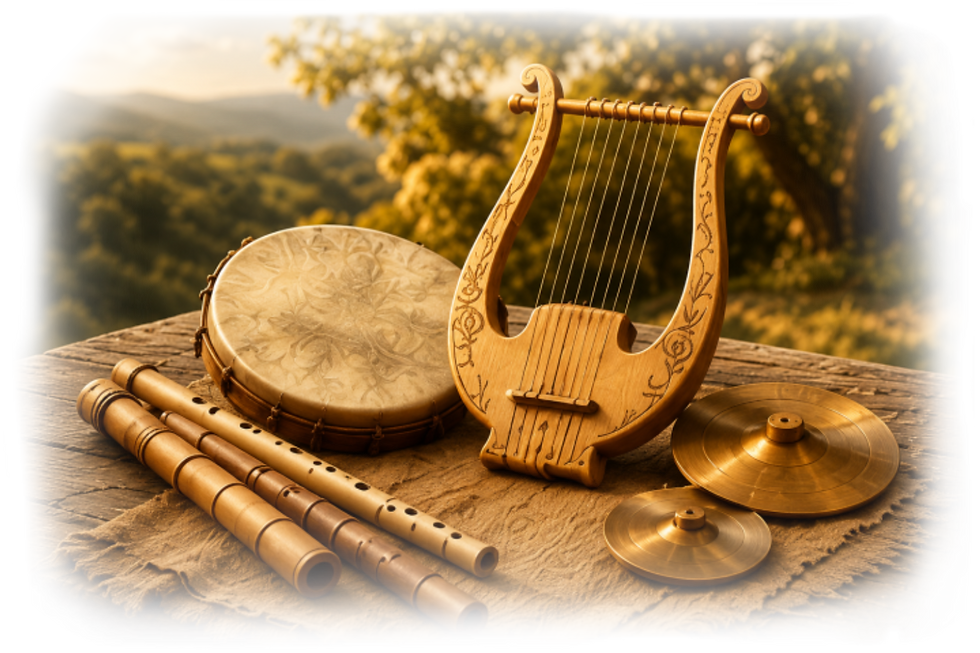
SOUNDS OF FIRST CENTURY ISRAEL
Path Of The Sun

X Close
Day 4: INTO THE WILDERNESS
יום רביעי
(DAY 4)



DID YOU KNOW?
Collapsible text is perfect for longer content like paragraphs and descriptions. It's a great way to give people more information while keeping your layout clean. Link your text to anything, including an external website or a different page. You can set your text box to expand and collapse when people click, so they can read more or less info.
JOURNEY VIDEO
Experience the story of day
4
TODAY'S LOCATION
Explore the history

Matthew 4:1- Then was Jesus led up of the Spirit into the wilderness to be tempted of the devil.
Luke 4:1- Jesus, full of the Holy Spirit, left the Jordan and was led by the Spirit into the wilderness.
JOURNEY VIDEO
TODAY'S SCRIPTURE REFERENCES
Read the truth found in today's journey
DAILY INSIGHTS

Click Todays Location
For Interesting
Facts

Path Of The Sun

SOUNDS OF FIRST CENTURY ISRAEL
X Close
Day 4: INTO THE WILDERNESS
(DAY 4)
יום רביעי


The Judean Wilderness, known in ancient Hebrew as Yeshimon—meaning "the desolation"—is a brutal, rain-shadow desert plunging from the eastern slopes of Jerusalem down to the Dead Sea. Unlike sandy deserts, this terrain is a jagged labyrinth of sun-baked limestone cliffs, sheer canyon walls (wadis), and oppressive heat. In the first century, the ancient world viewed this wilderness as a dangerous, chaotic void inhabited only by wild beasts, outlaws, and those seeking absolute isolation from society. For generations, skeptics dismissed the narrative of a forty-day survival in this environment as purely symbolic allegory. However, extensive archaeological surveys of Jebel Quruntul (the Mount of Temptation) rising above Jericho have mapped dozens of natural, interconnected limestone caves carved directly into the mountain's sheer cliff face. These rock shelters date securely to the Roman era and provided the exact physical infrastructure required for a prolonged fast, offering critical protection from the blistering 100°F daytime heat and the freezing desert nights. Inside these identical Judean wilderness caves, the extreme aridity has preserved remarkably intact first-century artifacts, including simple Roman-period storage jars, woven palm-leaf mats, and discarded leather sandals. These physical discoveries prove that these barren cliffs were actively utilized during the time of Jesus by first-century ascetics, prophets, and hermits seeking spiritual testing. These artifacts ground the narrative in a gritty reality, illustrating the exact environment where Jesus sat in absolute solitude, facing hunger, the elements, and the ultimate test of His identity.
DID YOU KNOW?
X Close
Day 4: INTO THE WILDERNESS
יום רביעי
(DAY 4)
DID YOU KNOW?
The Judean Wilderness, known in ancient Hebrew as Yeshimon—meaning "the desolation"—is a brutal, rain-shadow desert plunging from the eastern slopes of Jerusalem down to the Dead Sea. Unlike sandy deserts, this terrain is a jagged labyrinth of sun-baked limestone cliffs, sheer canyon walls (wadis), and oppressive heat. In the first century, the ancient world viewed this wilderness as a dangerous, chaotic void inhabited only by wild beasts, outlaws, and those seeking absolute isolation from society. For generations, skeptics dismissed the narrative of a forty-day survival in this environment as purely symbolic allegory. However, extensive archaeological surveys of Jebel Quruntul (the Mount of Temptation) rising above Jericho have mapped dozens of natural, interconnected limestone caves carved directly into the mountain's sheer cliff face. These rock shelters date securely to the Roman era and provided the exact physical infrastructure required for a prolonged fast, offering critical protection from the blistering 100°F daytime heat and the freezing desert nights. Inside these identical Judean wilderness caves, the extreme aridity has preserved remarkably intact first-century artifacts, including simple Roman-period storage jars, woven palm-leaf mats, and discarded leather sandals. These physical discoveries prove that these barren cliffs were actively utilized during the time of Jesus by first-century ascetics, prophets, and hermits seeking spiritual testing. These artifacts ground the narrative in a gritty reality, illustrating the exact environment where Jesus sat in absolute solitude, facing hunger, the elements, and the ultimate test of His identity.
SOUNDS OF FIRST CENTURY ISRAEL
Path Of The Sun
TODAY'S
D E V O T I O N A L


Beneath The Stone Arch
The Unexpected Path
Immediately after His baptism, Jesus was led by the Spirit into the wilderness.
The heavens had opened. The Father had spoken. The Spirit had descended. It might seem that the next step should have been a public miracle, a great sermon, or the gathering of crowds.
Instead, Jesus walked into silence.
The Judean wilderness was barren, harsh, and unforgiving. There were no cheering voices, no comfortable shelter, and no visible signs of success. Yet Jesus was not lost, abandoned, or outside the will of God. Scripture tells us that He was led by the Spirit into that lonely place.
This reminds us that not every difficult season is a sign that we have taken a wrong turn.
Sometimes the same God who leads us beside peaceful waters also leads us into places where our faith must grow deeper. The wilderness strips away distractions. It exposes what we depend on. It teaches us to listen when every other voice has grown quiet.
Jesus entered the wilderness carrying the words of His Father: “This is My beloved Son.” Those words became an anchor when the surroundings offered no comfort.
We also need truth to hold onto in barren seasons. Feelings may change. Circumstances may become uncertain. Prayers may seem unanswered. But the character of God remains the same.
The wilderness is not always a place of punishment. It can be a place of preparation.
Perhaps you are walking through a wilderness today. You may feel isolated, uncertain, or spiritually dry. Do not assume God has left you. The wilderness may be the very place where He is strengthening your faith, and preparing you for what comes next.
You may not understand why you are there, but you can trust the One who led you.