


THE JESUS JOURNEY

LOCATION:
Judean Desert
5
Day 5 of 180
"Jesus remains alone in the Judean Wilderness, far from the familiar comforts of daily life. For forty days He fasts among the barren limestone hills, entering a place of hunger, silence, and complete dependence on the Father before the temptations begin."
The Wilderness Fast
Forty Days Alone
YOUR PROGRESS
DAYS COMPLETED
3% of the Journey
5 / 180
JOURNEY AUDIO
Hear today's setting

Add paragraph
DAY
1

Add paragraph
DAY
1
Add paragraph
DAY
1
Add paragraph
DAY
1
Add paragraph
DAY
1
Add paragraph
DAY
DAY
Add paragraph
DAY
DAY
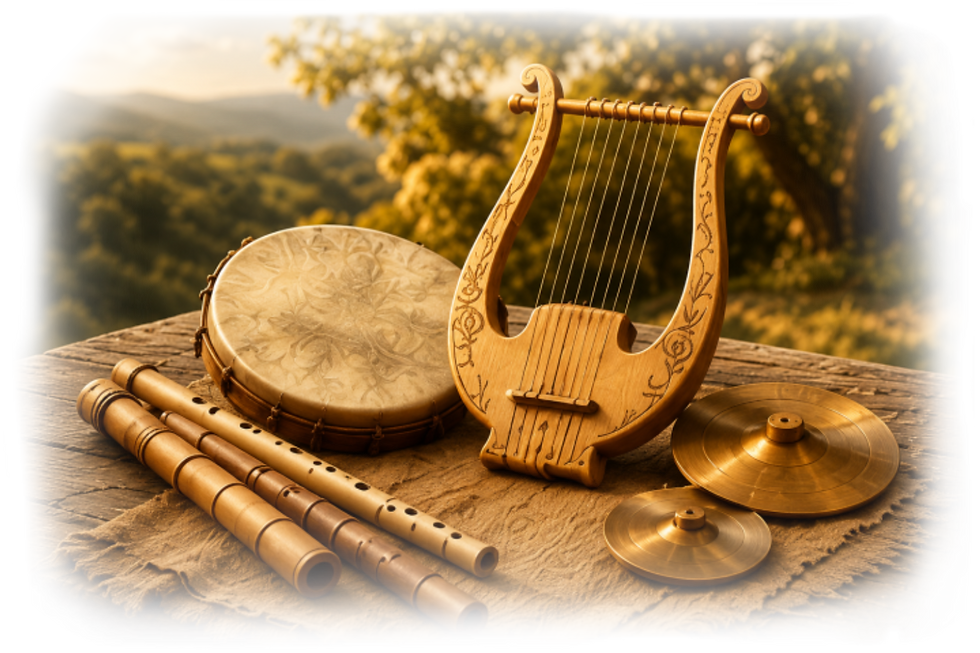
SOUNDS OF FIRST CENTURY ISRAEL
Cliffs Of The Wild

X Close
Day 5: FORTY DAYS ALONE
יוֹם חֲמִישָׁא
(DAY 5)



DID YOU KNOW?
Collapsible text is perfect for longer content like paragraphs and descriptions. It's a great way to give people more information while keeping your layout clean. Link your text to anything, including an external website or a different page. You can set your text box to expand and collapse when people click, so they can read more or less info.
JOURNEY VIDEO
Experience the story of day
5
TODAY'S LOCATION
Explore the history

Matthew 4:1 Then was Jesus led up of the Spirit into the wilderness to be tempted of the devil.
Luke 4:1- Jesus, full of the Holy Spirit, left the Jordan and was led by the Spirit into the wilderness.
JOURNEY VIDEO
TODAY'S SCRIPTURE REFERENCES
Read the truth found in today's journey
DAILY INSIGHTS

Click Todays Location
For Interesting
Facts

Cliffs Of The Wild

SOUNDS OF FIRST CENTURY ISRAEL
X Close
Day 5: FORTY DAYS ALONE
(DAY 5)
יוֹם חֲמִישָׁא


The Gospels do not name the exact mountain, cave, or valley where Jesus spent His forty days. Matthew and Luke simply tell us that He was led into the wilderness after His baptism. However, an ancient Christian tradition identifies the steep cliffs west of Jericho as the place of His fasting and temptation. This mountain is commonly called the Mount of Temptation, Jebel Quruntul, or Mount Quarantania. The name Quruntul comes from the Latin word quadraginta, meaning “forty”—a reference to the forty days Jesus fasted in the wilderness. The name became firmly associated with the mountain during the Crusader period, although the tradition itself is much older. The cliffs are filled with natural caves. Approximately thirty to forty caves have been identified along the mountain’s eastern slopes, many of which were occupied by Christian hermits and monks seeking solitude, prayer, and separation from the distractions of ordinary life. These caves later served as individual prayer rooms, living cells, chapels, and places of retreat. In A.D. 340, a monk named Saint Chariton established a lavra on the mountain—a community in which hermits lived separately in caves but gathered for worship. A monastery later developed around the cave traditionally believed to have sheltered Jesus. The earlier monastery suffered destruction and rebuilding through the centuries, while the present Greek Orthodox Monastery of the Temptation was constructed or extensively restored during the 1890s. The monastery appears to cling to the face of the nearly vertical cliff. Portions of it are built directly into the rock, incorporating natural caves into its rooms and chapels. Inside is a cave-shrine with a narrow corridor and chambers carved into the mountain. A rock preserved there is traditionally identified as a place where Jesus rested during His temptation. For generations, people seeking complete solitude looked toward these same barren cliffs. The caves offered limited shelter, but little comfort. Water was scarce, the climb was severe, and the silence was nearly complete.
DID YOU KNOW?
X Close
Day 5: FORTY DAYS ALONE
יוֹם חֲמִישָׁא
(DAY 5)
DID YOU KNOW?
The Gospels do not name the exact mountain, cave, or valley where Jesus spent His forty days. Matthew and Luke simply tell us that He was led into the wilderness after His baptism. However, an ancient Christian tradition identifies the steep cliffs west of Jericho as the place of His fasting and temptation. This mountain is commonly called the Mount of Temptation, Jebel Quruntul, or Mount Quarantania. The name Quruntul comes from the Latin word quadraginta, meaning “forty”—a reference to the forty days Jesus fasted in the wilderness. The name became firmly associated with the mountain during the Crusader period, although the tradition itself is much older. The cliffs are filled with natural caves. Approximately thirty to forty caves have been identified along the mountain’s eastern slopes, many of which were occupied by Christian hermits and monks seeking solitude, prayer, and separation from the distractions of ordinary life. These caves later served as individual prayer rooms, living cells, chapels, and places of retreat. In A.D. 340, a monk named Saint Chariton established a lavra on the mountain—a community in which hermits lived separately in caves but gathered for worship. A monastery later developed around the cave traditionally believed to have sheltered Jesus. The earlier monastery suffered destruction and rebuilding through the centuries, while the present Greek Orthodox Monastery of the Temptation was constructed or extensively restored during the 1890s. The monastery appears to cling to the face of the nearly vertical cliff. Portions of it are built directly into the rock, incorporating natural caves into its rooms and chapels. Inside is a cave-shrine with a narrow corridor and chambers carved into the mountain. A rock preserved there is traditionally identified as a place where Jesus rested during His temptation. For generations, people seeking complete solitude looked toward these same barren cliffs. The caves offered limited shelter, but little comfort. Water was scarce, the climb was severe, and the silence was nearly complete.
SOUNDS OF FIRST CENTURY ISRAEL
Cliffs Of The Wild
TODAY'S
D E V O T I O N A L


Seven Days Of Salt
Solitude
For forty days, Jesus remained in the wilderness.
In Scripture, forty often marks a season of testing and transformation. The rain fell for forty days in the time of Noah. Moses remained on the mountain for forty days. Israel wandered in the wilderness for forty years. Now Jesus entered His own forty-day season before beginning the ministry that would change the world.
Nothing about those days appeared productive. No one was watching. Nothing visible was being built. Yet something was happening in the silence.
Jesus was fasting, praying, and depending entirely upon His Father.
We often measure progress by what can be seen—what we can produce, or complete. But some of God’s deepest work happens where no one else can see it. In hidden seasons, He strengthens our faith, reveals what we truly depend on, and teaches us that His presence is enough.
The silence did not mean God was absent. The hunger did not mean God had forgotten Him. Each difficult day was preparing Jesus for the testing and ministry still ahead.
There may be seasons when your prayers seem to accomplish nothing. Days may pass without answers, encouragement, or visible change. You may wonder whether anything meaningful is happening.
But God is still at work.
The quiet days are not wasted days. The hidden struggle may be building strength you will need later.
When nothing around you seems to be changing, allow God to change something within you.